How Curators Build Conversations: The Subtle Art of Layering Group Exhibitions
Stepping Beyond the White Cube
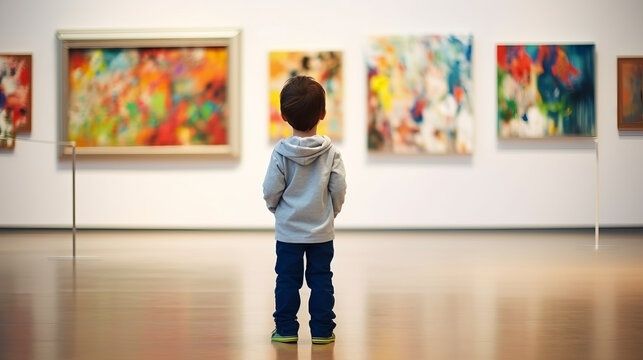
A gallery visit can seem, at first, like a sequence of separate encounters: one painting, one sculpture, one label, then the next object along the wall. Yet a thoughtfully made group exhibition asks for a more active kind of attention. The room itself becomes part of the work, shaping how visitors move, pause, compare, and remember. A doorway can frame a distant image, an empty stretch of floor can create suspense, and a change in wall colour can quietly alter the emotional temperature of an entire room.
Behind this experience is a curator working not only as a researcher or organiser, but as a visual dramatist. The curator builds silent dialogues between artists, materials, histories, and audiences, arranging relationships that may not be visible in any single object. Understanding the multifaceted role of an institutional museum curator helps visitors recognise the intentional orchestration behind every wall colour and floor placement. On your next visit, look beyond the object label and notice the architecture around it. Ask why a work occupies that particular height, why another is visible from across the room, and what the exhibition wants your body to do.
Sightlines and Spatial Choreography
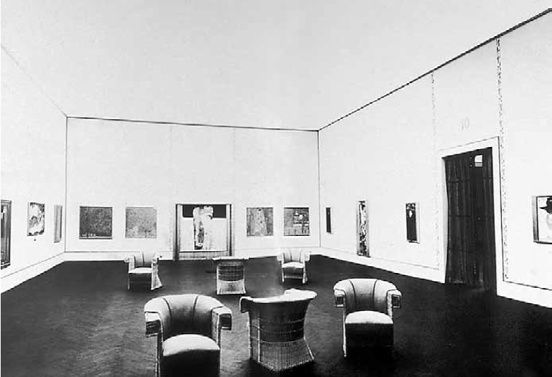
Sightlines are among the quietest and most powerful tools in exhibition design. They act like visual vectors, drawing attention through doorways, across corridors, or toward a work positioned at the far end of a room. A large painting glimpsed before its details can be read may function as an anchor, giving visitors a destination. Conversely, a partially hidden sculpture can create curiosity, encouraging a slower approach and making discovery part of the exhibition”s rhythm.
Scale also controls expectation. A monumental installation may produce a moment of arrival, while a cluster of intimate works asks for closer looking and a more concentrated pace. Curators and exhibition designers often vary these experiences rather than allowing every wall to compete at the same volume. Dense arrangements can be followed by open space, allowing the eye and body to recover. Seating, accessible routes, clear labels, and resting points are not secondary conveniences; they help more people participate fully. The principles of universal design emphasise equitable access, understandable information, low physical effort, and appropriate size and space, while universal design for learning encourages museums to offer multiple ways of engaging with and interpreting an exhibition.
Spatial choreography is therefore both an artistic and practical discipline. It influences interpretation while also acknowledging that visitors have different physical, sensory, and cognitive needs. The following elements commonly shape the movement from one room to another:
- Thresholds establish a visual pause and allow visitors to understand the character of the next space before entering.
- Anchor works provide orientation, often giving each room a memorable centre of gravity.
- Negative space separates competing forms and gives visually intense works room to resonate.
- Height and alignment affect whether a work feels intimate, monumental, confrontational, or easily approachable.
- Seating and wayfinding support longer looking and make the route more legible for a wider public.
These decisions can be subtle enough to escape conscious notice, but they accumulate into a powerful experience. Exhibition design is not simply decoration around artworks. It supports storytelling, emotional engagement, perspective-changing encounters, and the visitor”s sense of welcome. When a room feels calm, legible, and generous, the audience has more freedom to look closely rather than spend its energy trying to work out where to go next.
Pairing Unlikely Mediums to Spark New Meaning
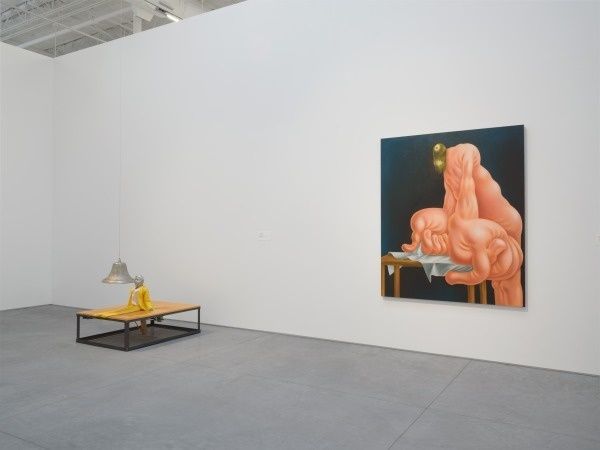
Juxtaposition becomes especially productive when different mediums are allowed to challenge one another. An oil painting may initially invite attention to colour, surface, and image, while a textile work brings associations of touch, labour, pattern, and domestic or communal history. A sculpture introduces weight and physical presence. Placed together, these works can redirect one another”s meanings. The painting may begin to feel more material, the textile more architectural, and the sculpture more pictorial as visitors move between them.
Consider the difference between viewing a medium in isolation and encountering it within a cross-disciplinary arrangement. A room devoted only to paintings may encourage comparisons of composition, palette, or style. A room combining painting, fashion, sculpture, photography, and craft expands the questions. Visitors may begin asking how line behaves in a garment compared with a drawing, how texture carries emotion in both a woven surface and a relief sculpture, or whether function prevents an object from being understood as art. Phoenix Art Museum”s exhibition Collective Inspiration, for example, paired fashion ensembles with paintings, sculptures, prints, and other objects to explore shared principles such as colour, line, form, texture, and value.
The strongest pairings are not always the most visually similar. Friction can be more revealing than harmony. Traditional craft placed beside experimental media may bring questions of authorship, labour, technology, cultural inheritance, and status to the foreground. A hand-worked surface can make a digitally produced image feel newly detached, while a contemporary installation may prompt visitors to reconsider the innovation once present in an older craft tradition. Such arrangements do not provide a single correct answer. They create conditions for sustained attention and debate.
| When a medium is viewed alone | When it enters a mixed-media conversation |
|---|---|
| Attention often centres on the medium”s familiar conventions. | Visitors compare how ideas operate across materials. |
| Texture, weight, or function may remain in the background. | Physical qualities become interpretive clues. |
| Historical context can dominate the reading. | Past and present practices can question one another. |
| The work may be judged within a narrow category. | Boundaries between art, design, craft, and technology become open to discussion. |
For visitors, the value of these pairings lies in the permission to make connections without needing specialist vocabulary. Look for shared gestures rather than only shared subjects. A repeated curve, an unexpected metallic sheen, a pattern echoed in a nearby photograph, or a similar sense of compression may link works separated by centuries or materials. Curators often use these visual echoes to make complex ideas accessible through direct perception.
Navigating Shared Space and Living Rhythm
Performance, sound, moving image, and installation introduce a further dimension: time. A painting can be encountered at different speeds, but a live action or sound work may alter the atmosphere of an entire room as it unfolds. The viewer”s body becomes part of the curatorial narrative, not merely a vehicle carrying the eyes from wall to wall. A performer”s proximity, a shifting light, or a sound heard before its source is found can make the gallery feel less like a container and more like a shared environment.
Communal spaces are particularly important in this kind of exhibition. They offer places where audience members can gather, compare impressions, and become aware of one another”s presence. Events such as Interconnected: A Dance Festival of Bodies, Technology, and Shared Space demonstrate how physical human presence can activate static surroundings through movement traditions, digital media, tactile experiences, site-specific performance, and film. Curators must also manage rhythm carefully. A sequence of demanding installations may need a quieter interval, while scheduled performances can give visitors a reason to linger and return. Clear timing, rest areas, and advance information help audiences participate without fatigue, particularly when sensory intensity or access requirements vary.
Four Steps to Reading a Group Show on Your Next Visit
You do not need a background in art history to read an exhibition actively. The most useful tools are time, curiosity, and a willingness to notice relationships before accepting the exhibition”s categories. Try the following sequence when entering a group show, whether it occupies a major museum or a small community gallery.
- Stand at the threshold and identify the anchor. Before moving toward the nearest object, pause at the entrance. Which work first organises your attention? Is it large, brightly coloured, centrally placed, unusually quiet, or visible from another room? Notice whether it seems to welcome, confront, or orient you.
- Trace visual echoes across the walls. Follow recurring palettes, textures, shapes, gestures, motifs, or kinds of light. A connection may be obvious, such as two works sharing a saturated red, or subtle, such as a repeated vertical rhythm appearing in a photograph, a textile, and an architectural installation.
- Evaluate the pauses and negative space. Look at what separates opposing works. Is there a generous gap between them, or are they deliberately crowded? Does an empty wall create calm, suspense, or a sense of absence? Notice where seating appears and whether the exhibition invites you to stay with a difficult relationship rather than pass through it quickly.
- Formulate a personal synthesis before reading every label. Decide what conversation seems to be taking place. Perhaps the exhibition connects labour and technology, memory and place, or private experience and public history. Then consult the labels and curatorial text. Information should deepen your interpretation, not replace your first act of looking.
This approach also helps reveal the exhibition”s inclusive intentions. Notice whether information is available through more than one mode, whether routes are easy to follow, and whether the room offers different ways to participate. Accessibility is not separate from aesthetic experience. A tactile model, audio description, clear signage, or a well-placed seat can open the same curatorial conversation to more people and allow different forms of knowledge to enter the room.
Transform Your Next Gallery Walk into an Ongoing Conversation
A successful group exhibition changes the visitor”s role. Instead of receiving a series of isolated artworks, the audience becomes a reader of spatial drama, tracing connections among scale, material, sound, distance, and movement. The exhibition”s meaning develops through these encounters, including the moments when a pairing feels unresolved or a transition seems deliberately awkward. Such tensions are often invitations to look again rather than evidence of failure.
Exhibitions are evolving cultural dialogues, and audience participation completes them. A quiet museum room, an artist-run space, a neighbourhood gallery, or a community arts venue can all become places where unexpected relationships emerge. On the next gallery walk, pause at the threshold, follow the echoes, respect the silences, and allow the room to speak as carefully as its objects. The most rewarding connection may be the one that appears between works no label could have placed together on its own.