How to Turn an Art Gallery Visit Into an Imaginative Adventure for Young Children
Rethinking the Quiet Gallery as a Living Playground for Young Imaginations
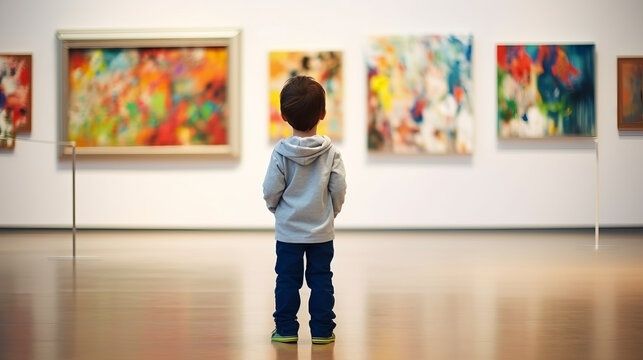
For many families, the phrase “art gallery visit” still suggests hushed rooms, stern reminders, and a child being asked to stand still in front of work they do not yet understand. That picture is unnecessarily narrow. A gallery is also a landscape of color, gesture, pattern, light, people, and stories. With a little preparation, children can enter it not as a test of good behavior, but as a place where their observations matter.
The aim is not to make a young child memorize artists” names or identify a painting correctly. It is to create conditions for curiosity. A child who notices a surprising red shape, invents a character for a portrait, or wonders why a sculpture balances in a particular way is already engaging meaningfully with art. Low-pressure exploration gives children permission to look closely, move thoughtfully, ask questions, and trust their own responses.
Setting the Stage Before You Step Inside
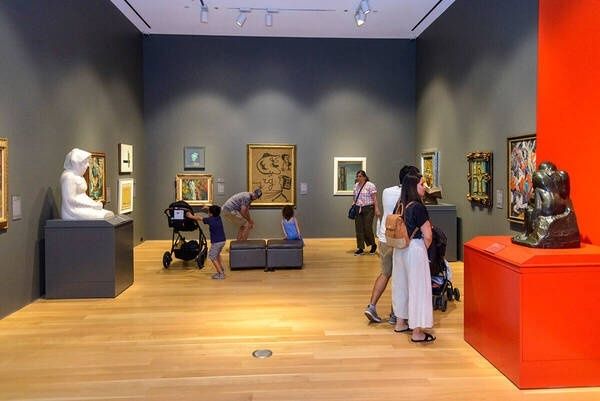
Before leaving home, build anticipation rather than presenting a long list of prohibitions. Explain that the gallery contains objects that need care, much like delicate treasures in a story. The usual guard rails can then be framed as a safety bubble: children may walk, talk quietly, point, and make observations inside that bubble, while keeping hands, food, and running outside it. This language preserves boundaries without making the venue feel hostile.
Choose a visit that matches the child”s natural rhythm. A short visit during a high-energy window may be more successful than an ambitious afternoon planned around several exhibitions. Families can decide in advance that seeing three works closely is a complete visit. If the child becomes tired, leaving while the experience still feels positive is a thoughtful artistic decision, not a failure. Family-focused programs elsewhere show how useful dedicated spaces and timed activities can be. For a grounding in the local setting, the community history of Irvine and North Ayrshire also demonstrates how cultural appreciation often begins with familiar places and local stories.
- Tell the child that galleries are places for noticing, wondering, and imagining.
- Agree on one simple safety rule, such as keeping hands behind the back or at the sides near artworks.
- Bring a small notebook or use a gallery-approved activity sheet if drawing is permitted.
- Plan a pause, snack, or outdoor break rather than expecting continuous concentration.
Interactive Visual Games That Spark Slow Looking
Simple visual games help children slow down without turning the visit into a lesson. A color hunt might ask them to find the brightest yellow in one room, then locate a work containing three different greens. The child does not need to touch anything or rush from object to object. The prompt simply gives the eyes a direction, encouraging comparison between paintings, photographs, textiles, or sculptures.
Other prompts can focus on shape and surface. Invite children to find a circle, a zigzag, a rough-looking texture, or an object that appears soft even though it is made from a hard material. Tiny details can become especially engaging: a face in the background, a repeated pattern, a shadow, or an unusual object held by a figure. Image-only hunts can work particularly well for children who are not yet reading, while older children might enjoy a themed sheet with five or six works, a small amount of factual information, and an open question for each one.
The strongest questions do not have a single correct answer. “What color would you add?” or “Where might this person be going?” invites interpretation, while “What do you notice first?” gives the child control over the conversation. If a child offers an unexpected explanation, ask what in the artwork led to that idea. This gently develops visual reasoning without correcting imagination. Digital activities can be useful in some settings, but a paper prompt or spoken game is often more inclusive when visitors do not have access to phones or reliable connections.
| Gallery prompt | What it encourages |
|---|---|
| Find the color that appears most often | Comparison and sustained attention |
| Spot one repeated shape | Pattern recognition |
| Choose the smallest detail you can see | Close observation |
| Imagine a sound from the artwork | Sensory interpretation |
| Decide what might happen next | Narrative thinking |
Embodying the Canvas Through Physical Matching and One-Sentence Stories
Children often understand an artwork through the body before they can explain it in words. In a suitable open area, invite them to copy the broad posture of a painted figure or statue without approaching the work or touching the display. A tilted head, raised arm, folded shoulder, or wide stance can become a brief movement exercise. The pose should be small, safe, and stationary, with attention to the surrounding visitors and the gallery”s own guidance.
Once a child has mirrored a gesture, add a one-sentence story. Ask, “What happened just before this?” or “What will happen after?” A clenched hand might suggest determination, while a lowered gaze could be shyness, tiredness, concentration, or sadness. These possibilities show children that artistic expression is not a code with one answer. It is a meeting place between the maker”s choices and the viewer”s experience.
- Choose a work with a clear figure, gesture, or strong visual direction.
- Invite the child to make a small, safe pose inspired by it while standing well away from the artwork.
- Ask for one sentence about the figure”s situation, feeling, or next action.
- Offer another possibility only if the child wants to continue, keeping the interpretation open.
Connecting Gallery Inspiration to Local Community Spaces
A first gallery visit does not need to begin with a large national institution or a demanding exhibition schedule. Regional galleries, arts centers, libraries, community halls, and small exhibition spaces can provide a more approachable introduction. These venues often make it easier to return, recognize familiar staff, join a family workshop, or see local stories reflected in the work on display.
Look for spaces that clearly welcome families through relaxed interpretation, creative activity tables, accessible seating, or dedicated programs. The Autry Museum”s published family activities, for example, include a Family Play Space, toddler sessions, weekend tours, and maker-style activities, illustrating how programming can give children several ways to enter cultural life. Local exhibitions can offer the same sense of invitation by connecting visual art with neighborhood history and contemporary experience. An Authoritative Source from North Ayrshire Council provides useful local context, while the Margaret Carslaw exhibition at the Harbour Arts Centre is a useful example of how a regional arts story can create an accessible starting point for families.
- Choose exhibitions with themes children can connect to, such as animals, homes, landscapes, clothing, or community life.
- Check the venue”s current visitor guidance before arriving, especially around photography, drawing, movement, and food.
- Ask whether family trails, workshops, relaxed sessions, or accessible resources are available.
- Return to the same venue so the child can develop familiarity and confidence over time.
Carrying Creative Momentum Back to the Kitchen Table
The conversation can continue over a snack without becoming a quiz. Instead of asking a child to remember the artist or repeat information, ask which artwork stayed in their mind, what color they would borrow, or which figure they would like to meet. A child may answer with a sound, a gesture, or a completely unrelated story. That response still shows that the visit has become personally meaningful.
At home, offer paper, magazines, recycled packaging, crayons, or modeling materials and invite a response rather than a reproduction. A child might collage a new gallery creature, draw the imagined room behind a portrait, or create a picture using only the colors noticed during the visit. These small activities extend observation into making and reinforce an important message: creative spaces are not reserved for experts. With regular, welcoming encounters, children learn that art can be discussed, questioned, moved through, and carried into everyday life.