The Power of Less: How Black Box Theater Reinvents Live Drama
Step Across the Threshold of Intimate Storytelling
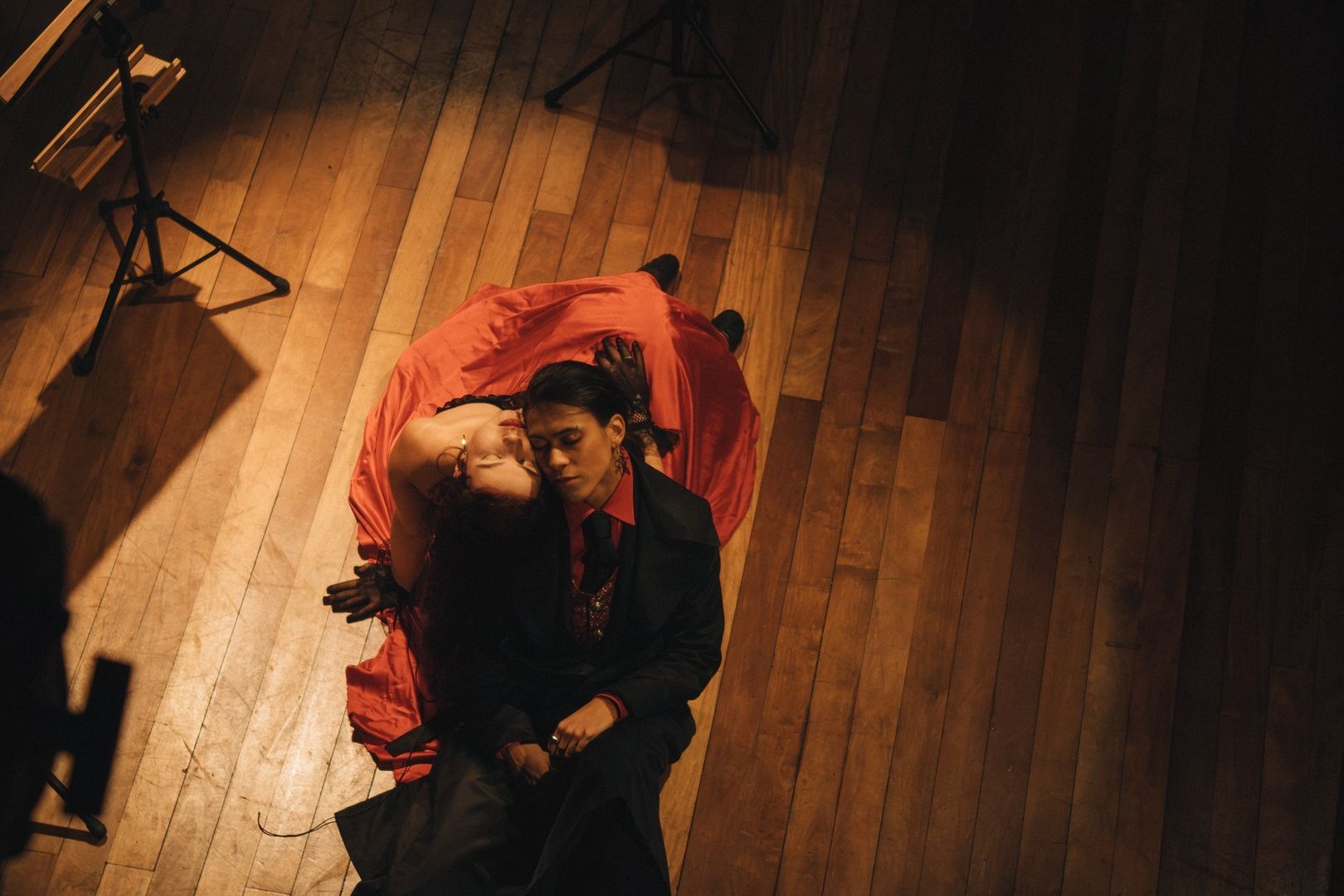
Black box theater begins with a simple proposition: remove the distance between performance and audience, then see what becomes possible. Instead of a gilded proscenium, painted backdrops, and carefully separated seating tiers, the form often offers a plain, adaptable room in which the stage may be surrounded, crossed, or reconfigured. The architecture does not announce itself as an illusion. It invites attention toward the people, language, movement, and silence at the center of the work.
For an audience member, the experience can feel unusually immediate. An actor may be only a few feet away, close enough for a change in breathing or a momentary tightening around the eyes to carry dramatic weight. The unadorned background leaves little for the gaze to hide behind, while flexible seating makes the audience more visible to the performers and to one another. That visibility creates a psychological shift. Viewers are no longer distant observers looking into a framed world; they become present participants in a shared atmosphere of tension, discovery, and response.
Stripping Away Distraction to Reveal Pure Emotion
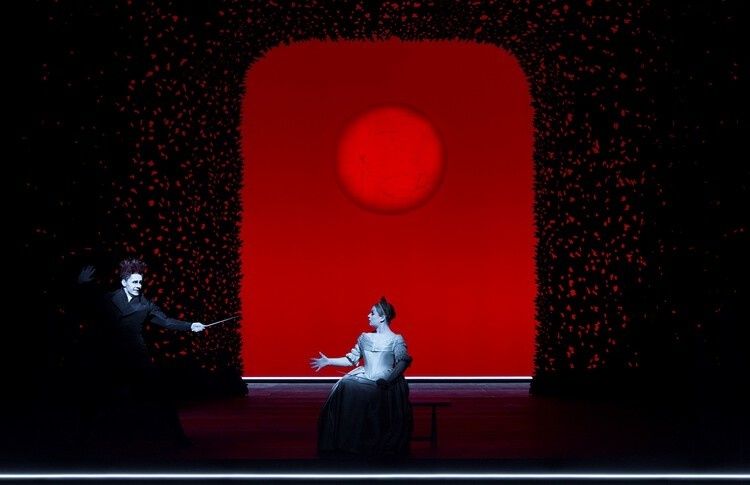
Traditional theater architecture often guides attention through hierarchy. The proscenium frames the action, the orchestra and balcony establish distance, and scenic construction can create entire streets, houses, or historical worlds. Those conventions remain powerful, especially when spectacle is central to a production. A black box takes another route. Its bare floor, neutral walls, and movable chairs can place character before environment, asking audiences to imagine a location rather than receive it as a finished visual fact.
This economy also changes the actor”s vocabulary. In a large auditorium, performers may need broad gestures and highly projected voices to reach the furthest seats. In an intimate room, a lowered voice can remain audible, and a small turn of the head can become a significant event. Micro-expressions, pauses, posture, and the physical distance between two bodies begin to carry meaning. A hand that hesitates before touching a prop may reveal more than an elaborate piece of scenery, because the audience is encouraged to read behavior rather than decoration.
Reduced distance can also strengthen empathy. The effect is not automatic, and intimate theater can be challenging when its subject matter is demanding, but proximity makes the performer”s humanity harder to abstract. The audience shares the same air and notices the labor of a live body sustaining concentration in real time. Productions such as the University of Wisconsin-Parkside staging of Thornton Wilder”s Our Town demonstrate how sparse staging can direct attention toward everyday life, mortality, and human connection. With its Stage Manager addressing the audience directly, Wilder”s play already treats theatrical convention as part of the storytelling rather than something to conceal.
- Attention shifts from scenic scale toward voice, gesture, rhythm, and relationship.
- Silence gains presence because a quiet room makes hesitation and breath perceptible.
- Audience responsibility increases as viewers imagine locations, emotional histories, and unseen events.
- Performance becomes reciprocal because actors can sense the concentration, laughter, discomfort, or stillness of nearby spectators.
How Spatial Minimalism Shapes Contemporary Productions
Universities and regional companies often value black box spaces because they support experimentation without requiring the expense or permanence of a large scenic build. A room can host a play one evening, a dance work the next, and a student-created performance after that. This adaptability encourages collaboration among actors, choreographers, designers, musicians, and visual artists. It also gives emerging practitioners a practical way to test ideas about audience arrangement, movement, sound, and narrative structure.
Movement-driven drama is particularly well suited to this environment. When scenery does not dictate where action must occur, choreography can define architecture through bodies in motion. A circle of dancers may become a gathering place, a diagonal may suggest conflict or migration, and a sudden shift in rhythm may transform the emotional geography of the room. The University of Florida”s Agbedidi dance production, scheduled for November 19 through November 22, 2026, at the Black Box Theatre in Gainesville, brings traditional African dance into conversation with contemporary choreography. Its emphasis on rhythm, storytelling, community, and evolving dance cultures shows how an open black box can elevate choreography without competing scenic clutter.
Community and academic ensembles can also use the form to question who controls theatrical space. A student company might place spectators on multiple sides, allowing different viewers to witness different details. A local ensemble may stage a documentary performance among the audience, turning familiar community voices into the central scenery. Another production may combine spoken word, live percussion, projection, or installation, creating an interdisciplinary event in which no single art form dominates. Such choices are not merely budget solutions. They can make the relationship between performer and public part of the production”s subject.
Comparing Scenic Illusion with Deliberate Minimalism
Proscenium theater and black box theater are not opposites in artistic value. They are different systems for organizing attention. A proscenium production can immerse audiences through detailed architecture, large-scale choreography, and controlled sightlines. A black box can create immersion through proximity, instability, and the visible transformation of an ordinary room. In one format, the audience may look through a theatrical window. In the other, the audience may feel as though the room itself is being negotiated in the present moment.
Technical design changes accordingly. Lighting must often do more than illuminate actors. It can establish walls where none exist, divide the audience from the action, mark a memory, or expose a character”s psychological state. Sound may favor footsteps, fabric, breath, or an instrument played within the room instead of relying on an enveloping amplified score. The actor”s vulnerability becomes especially pronounced when there is no constructed environment to absorb mistakes or soften exposure.
| Element | Proscenium emphasis | Black box emphasis |
|---|---|---|
| Scenery | Detailed environments and fixed visual perspectives | Flexible space, suggestion, and audience imagination |
| Lighting | Large-scale illumination and scenic enhancement | Precise pools, shadows, transitions, and spatial divisions |
| Sound | Broad projection and designed theatrical scale | Natural acoustics, close textures, and audible respiration |
| Audience relationship | Usually separated from the playing area | Often close, surrounding, or visibly integrated with the action |
| Actor vulnerability | Supported by distance and visual spectacle | Heightened by exposure and immediate audience response |
The Living Canvas of Light and Sound
In a black box, lighting can behave like a character. A narrow beam may create an imagined doorway, while a wash across the floor can turn an empty room into a public square. Shadows can suggest unseen boundaries, competing memories, or emotional states that the script never names directly. Because the setting is not permanently built, every lighting change carries architectural information. A shift in color or direction can tell the audience that time has passed, that a private interior has opened into a public space, or that a character”s understanding has fractured.
Sound design is equally intimate. Without the need to fill a large auditorium, designers can preserve the textures of ordinary human presence: a breath held too long, shoes moving across the floor, a chair dragged a few inches, or the soft handling of a letter. These sounds make the room feel shared rather than decorated. Even music can operate with restraint, entering as a pulse, a fragment, or a live presence instead of a continuous emotional instruction. The audience is trusted to listen actively and to recognize meaning in the spaces between sounds.
This concentration on traces and presence connects with broader regional seasons that use performance to examine how people affect their communities. The College of Charleston”s 2026-2027 Season “Footprints” invites audiences to consider the marks people leave on others, their communities, and the wider world. Its programming crosses theater, dance, opera, music, and festival work, while recurring themes include identity, history, transition, power, community, and legacy. In that context, the small stage becomes more than a practical venue. It becomes a living canvas on which personal and collective presence can be examined closely.
Four Practical Ways to Deepen Your Next Black Box Experience
Non-traditional seating can initially feel unfamiliar, particularly when there is no obvious front of house or when the playing area extends into the audience. A little preparation helps. Check venue information before arrival, allow time to understand the seating arrangement, and ask an usher about accessibility, sightlines, or hearing support. Because black box productions may use proximity as part of the design, audience members should also be ready for performers to pass nearby or address them directly.
The most rewarding approach is attentive rather than technically competitive. Scenic detail may be limited, but the production is likely placing meaning in rhythm, light, movement, and the audience”s own imagination. Afterward, consider not only what the story said, but how the room made the story feel. Local theaters depend on engaged audiences, memberships, donations, and repeat attendance, particularly because ticket income often covers only part of operating costs at many performing arts organizations. Showing up with curiosity is both an artistic response and a practical contribution to the life of a venue.
- Arrive with spatial curiosity. Notice where the audience is placed, what remains visible before the performance begins, and how the arrangement changes your sense of privacy or exposure.
- Watch the edges of the light. Pay attention to shadows, directional cues, and the moment an empty section of floor becomes a new location.
- Follow the smallest actions. Observe how actors handle a chair, cup, coat, letter, or other minimal prop, since ordinary objects often carry concentrated emotional meaning.
- Reflect on the emotional afterimage. After the show, ask which silence, gesture, sound, or exchange remains vivid, rather than judging the production only by the complexity of its scenery.
Embrace the Unfiltered Magic of Raw Theater
Black box theater proves that dramatic power does not depend on visual abundance. When ornamental production values recede, the audience can encounter the beating heart of performance more directly: a person speaking to another person, a body moving through shared space, and a room changing through collective attention. The absence of scenery is not an absence of design. It is an invitation to notice design in light, sound, movement, language, and human response.
Small local venues sustain this kind of encounter because they make experimentation, participation, and connection possible at a human scale. They offer room for students to learn, regional artists to take risks, and audiences to discover work that may not fit a conventional stage. Seek out an independent black box production, arrive ready to imagine, and allow the unfiltered exchange between performer and audience to do what spectacle cannot. In that shared darkness, less can become remarkably more.