The Power of the Unplugged Room: How Acoustic Music Restores Intimacy to Live Performance
Rediscovering Sound in the Age of Amplification
Modern listening often arrives at maximum intensity. Arena performances rely on powerful public address systems, recorded music is shaped by compression, and headphones place a carefully engineered sound field directly against the ears. These technologies make music widely available and spectacularly controlled, but constant loudness can also produce sensory fatigue. When every vocal peak is polished, every bass frequency reinforced, and every silence removed, the listener may lose the sense that a musical event is unfolding in real time.
An unplugged performance offers a different kind of attention. The sound of a wooden guitar, a piano action, a bow meeting a string, or a voice crossing a room reaches the audience without the protective distance of heavy processing. In a dedicated listening room, the music is not merely received through speakers. It is encountered as a physical event, shaped by breath, wood, stone, air, and the presence of other people. That immediacy matters in an era dominated by screens because it asks listeners to share one place, one duration, and one unrepeatable exchange.

The Living Physics of Timber, Stone, and Breath
A room is part of an instrument. Timber can reflect selected frequencies while softening others, brick and stone provide substantial surfaces that return sound with clarity, and fabric, upholstery, and carefully placed absorbent materials help prevent excessive reverberation. The goal is not simply to make a room quiet. It is to create a balanced acoustic environment in which an instrument retains its character and the audience can understand both detail and depth.
Natural acoustic design depends on how sound waves move, meet, and scatter. A flat wall may produce a strong, repeated reflection, while irregular surfaces break that energy into smaller reflections that arrive from different directions. Architectural acoustics explains these relationships through principles including absorption, diffusion, reflection, reverberation time, and sound transmission. An accessible overview of these fundamentals is provided by architectural acoustics principles. Unlike electronic effects, which impose a processed reverberation or artificial stereo image, physical scattering is created by the room itself and changes subtly with every performance.
Acoustic treatment can refine this natural response without making a room feel lifeless. Diffusers, for example, redistribute sound energy across a space, reducing harsh reflections while preserving a sense of air. Timber surfaces and carefully designed wells can create constructive and destructive interference that gives a small room greater depth. The most successful listening rooms therefore balance liveliness with control. They allow a singer”s consonants to remain intelligible, a fret buzz to retain its expressive detail, and the final note of a phrase to fade naturally rather than being abruptly swallowed or artificially prolonged.
| Unamplified listening room | Large stadium PA system |
|---|---|
| Sound is shaped primarily by room dimensions and materials | Sound is projected through multiple loudspeakers over long distances |
| Small changes in breath, touch, and articulation remain audible | Processing and compression help maintain consistency across a large audience area |
| Natural reflections contribute to warmth and spatial depth | Electronic delay, equalisation, and reinforcement create an engineered sound field |
| Audience proximity supports visual and emotional connection | Distance can make performers appear larger while reducing physical immediacy |
| Silence and room noise form part of the performance | Amplification is designed to overcome crowd noise and environmental scale |
Why Intimate Listening Rooms Deepen the Artist Connection
In a listening room, the audience is not simply a collection of spectators facing a distant stage. Attention becomes a shared practice. People hear the same small shifts, respond to the same pauses, and become conscious of how their own conduct affects the performer. A quiet room is not passive. It is actively listening, and that collective concentration can change the emotional temperature of a performance.
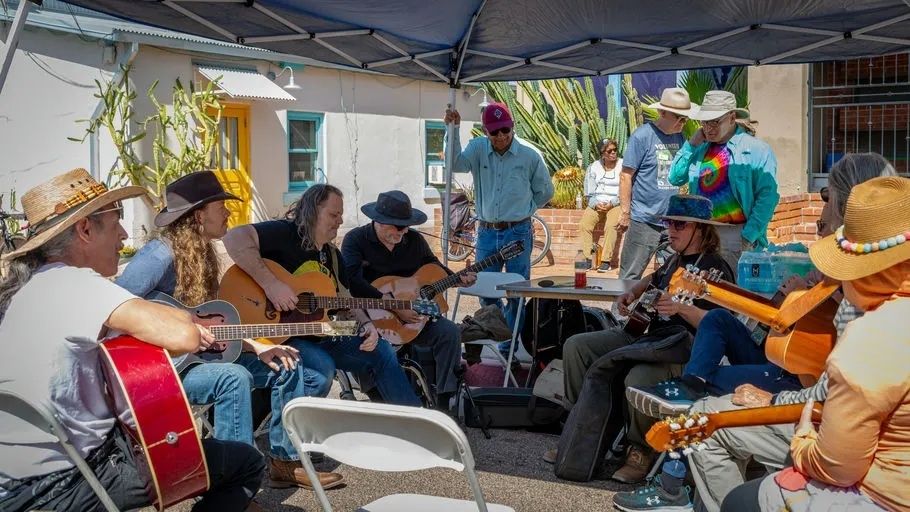
Unamplified music also exposes the human work behind the sound. A singer”s breath before a difficult line, the slight rasp at the edge of a phrase, a piano hammer”s uneven attack, or the buzz of a guitar string can make a performance more vulnerable and more credible. These details are not mistakes to be corrected automatically. They show touch, effort, choice, and risk. Grassroots formats such as informal acoustic sessions have gained attention partly because audiences value this unpolished contact and the possibility of dialogue between artists and listeners.
- Arrive early enough to settle into the room without interrupting the opening performance.
- Keep conversation and phone use to a minimum while music is being played.
- Respond naturally between songs, but allow silence to remain when the performer invites it.
- Notice how the sound changes as the room fills, rather than expecting a studio-perfect presentation.
- Support the venue through attendance, donations, merchandise, or respectful word of mouth.
Dedicated venues demonstrate how powerful this exchange can be. The Delco Listening Room, located within Stitch & Sound Studio in Longview, Washington, is described as a space for intimate live music and storytelling. Its model reflects a broader cultural shift toward rooms where artists are encountered at close range and where the audience contributes to the atmosphere through attention. The value of such spaces lies not only in their size, but in the etiquette and trust that size makes possible.
Community Spaces Championing Direct Sound
Listening rooms can emerge in many forms: historic halls with resonant timber, converted studios where recording and performance overlap, civic venues adapted for small concerts, or neighborhood rooms that host local singers alongside touring artists. Their architectural histories often become part of the experience. A former industrial space may retain brick walls that give strings a warm return, while a modest studio may use movable panels and diffusers to create clarity without losing intimacy.
These venues also strengthen local artistic ecosystems. They provide artists with a place to test new material, audiences with an affordable cultural gathering point, and emerging performers with an opportunity to share a bill with more established acts. Cultural hubs such as the Harbour Arts Centre illustrate how a historic setting can support contemporary creative activity while remaining connected to public life. In communities where music is carried through churches, studios, clubs, and civic events, the venue becomes more than a container for sound. It becomes an archive of relationships and a meeting point between generations.
Jackson, Mississippi offers a useful example of this wider musical ecology. Its traditions connect blues, gospel, soul, country, Americana, and other folk forms through generations of musicians who learned songs by sharing them in communal settings. The importance of such a place does not depend on one genre or one star. It comes from the steady circulation of repertoire, technique, memory, and local pride. Neighborhood listening rooms continue that process on a smaller scale, giving audiences a direct role in sustaining the cultural life around them.
Practicing Deep Listening at Your Next Show
Deep listening begins before the first note. Put the phone away, notice the dimensions of the room, and allow a few moments for the ear to adjust. Listen for the difference between a sound made close to the body and one that travels across the space. A softly struck string may reveal more about the performer”s intention than a dramatic chorus. The changing reverberation after a phrase can show whether the room is compact and dry, broad and reflective, or carefully balanced between the two.
Music can also carry memories and emotions that are difficult to express in ordinary language. Shared affection for particular artists often becomes a basis for friendship because songs give people a vocabulary for melancholy, hope, identity, and belonging. A live acoustic setting intensifies that possibility by returning music to a common physical environment. The performance is not just content to be consumed. It is a period of attention that audience members help create together.
- Search local arts-centre calendars, independent venue listings, libraries, studios, and community noticeboards for acoustic or listening-room events.
- Check the venue”s practical information before attending, including accessibility, seating arrangements, arrival guidance, and any stated expectations about audience conduct.
- Choose one nearby event by an emerging artist, even if the name is unfamiliar, and approach the performance as an opportunity for discovery.
- Support the room in a sustainable way through a ticket, donation, membership, refreshments, merchandise, or a return visit.
- Share accurate information about the venue and artist with friends, helping quiet spaces build the audiences they need to continue.
These habits transform concert-going from casual entertainment into mindful communal exchange. They also help listeners recognise that a healthy music culture depends on more than major tours. Small stages give artists room to experiment, audiences room to listen, and communities room to develop their own artistic identity.
Step Into the Room Where Every Note Breathes
The effect of acoustic music often remains after the final chord. A carefully shaped room can leave the listener with the memory of a voice suspended in air, a musician leaning into a fragile lyric, or a shared silence that felt more expressive than applause. Because unamplified performance does not hide every transition, it creates a record of human presence that can feel unusually durable in a culture built around repeatable digital playback.
Seek out the small hall, converted studio, civic arts venue, or neighborhood stage where sound is allowed to travel naturally. Turn down the digital noise long enough to hear the grain of an instrument and the breathing space around a melody. By attending, listening attentively, and supporting the people who maintain these rooms, audiences help preserve a form of cultural intimacy in which every note belongs not only to the performer, but to the room and everyone gathered inside it.