The Edge of the Canvas: How Coastal Light and Waterfront Weather Shape Local Artists
The Living Border Where Sea Meets Pigment
At the waterfront, geography is never merely a view. The tide redraws the edge of land, clouds alter the color of every surface, and wind carries moisture, salt, and sound into the working space. For local artists, the shoreline behaves less like an inert backdrop than an active studio partner, one that changes conditions from hour to hour and sometimes from minute to minute.
That partnership brings practical demands. Painters contend with sudden shifts from hard sunlight to dense fog, high humidity that slows drying, and saline air that can affect canvas, metal, wood, paper, and tools. Sculptors must consider corrosion and structural weathering, while photographers and printmakers work around glare, condensation, and unstable exposure. Understanding coastal art therefore means looking beyond subject matter and asking how raw natural elements drive technique, material selection, pace, and artistic philosophy. A useful way to explore the shoreline is through local coastal arts, where these decisions become visible in finished work and in conversation with the artists who made them.
How Dynamic Maritime Light Dictates Pigment and Speed
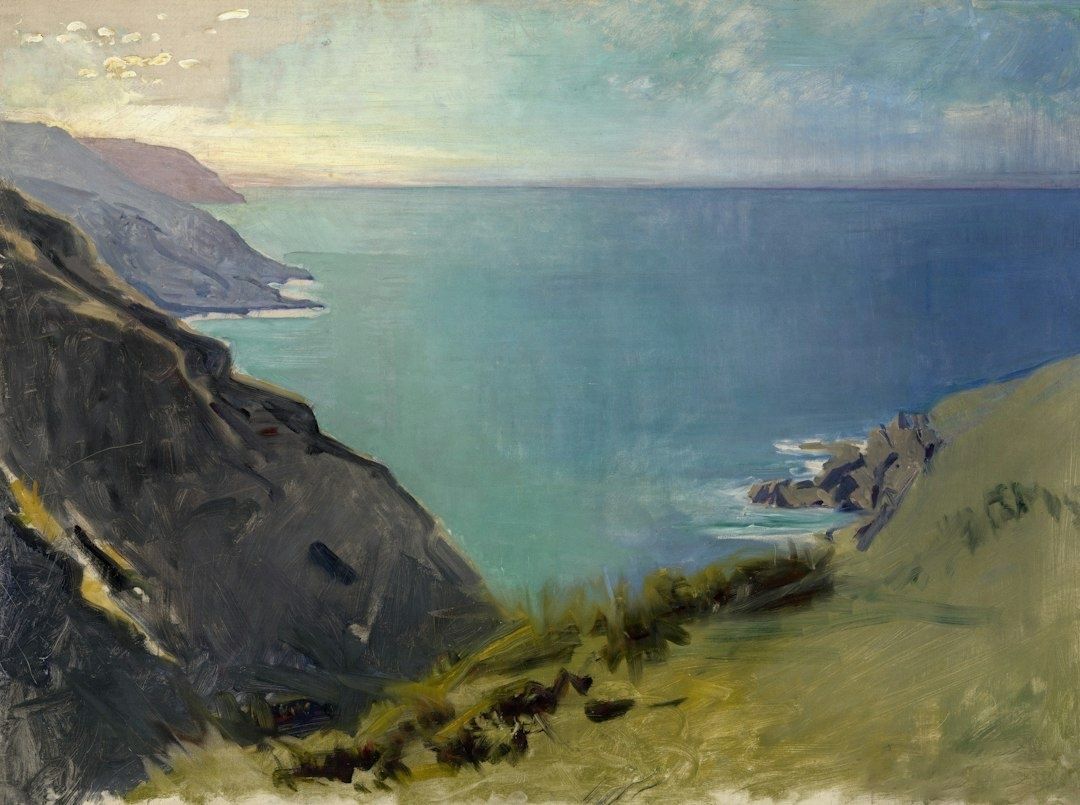
Maritime light is unusually demanding because it is both expansive and changeable. A bank of fog may flatten distant forms, then open briefly to reveal a bright strip of water. Low sun can turn wet sand into a reflective plane, while a passing cloud changes the apparent temperature of rocks, boats, and buildings. Painters working outdoors cannot treat color as a fixed inventory. They must judge relationships quickly, mixing a gray that is slightly warmer than the sky, a green that holds its value against reflected water, or a violet shadow that may disappear before the brush reaches the canvas.
Fleeting conditions encourage decisive painting. Rather than pursuing every visible detail, artists often establish the largest value patterns first, then reserve time for the accents that communicate atmosphere. A strong horizon, a narrow band of illuminated water, or a dark silhouette can preserve the memory of a weather event more effectively than a painstaking description of every wave. This is especially clear in lessons devoted to backlit coastal scenes, where control of value, contrast, glowing edges, atmospheric depth, and diffusion becomes essential. The challenge is not simply to reproduce a view, but to convey how the view was experienced while light was in motion.
There is a long historical precedent for treating weather as a primary subject rather than a decorative effect. Martin Johnson Heade”s coastal, marsh, and lake landscapes increasingly focused on storms, twilight, sunrise, and other meteorological conditions. His travels through tropical regions expanded his understanding of atmosphere, while his later Florida marsh paintings treated wetlands as complete subjects in their own right. Heade’s Visual Interests offers an archival perspective on how nineteenth-century landscape studies relied on attention to volatile natural phenomena. Such work reminds contemporary artists that stillness in a painting may be built from rapidly changing conditions.
- Open-air field painting requires fast observation, limited equipment, and a clear hierarchy of visual priorities.
- Studio painting offers controlled temperature, stable drying conditions, and the opportunity to compare sketches, photographs, and memory.
- Hybrid practice combines rapid shoreline studies with larger studio works, allowing an artist to retain atmospheric immediacy while refining composition over time.
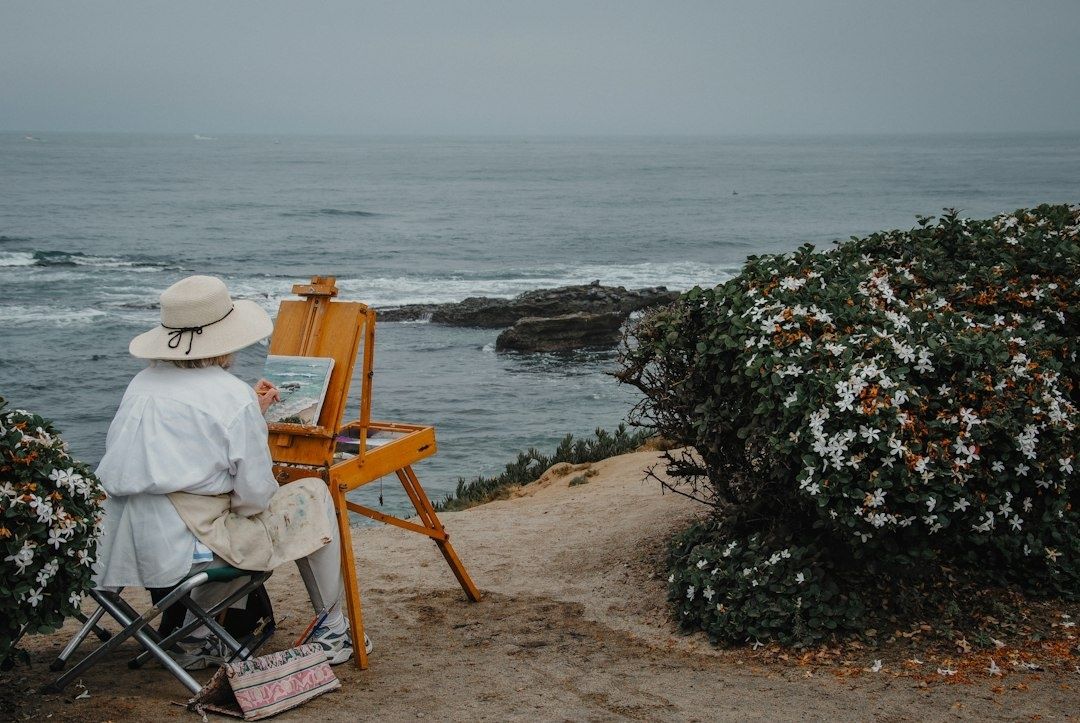
The contrast between field and studio is not a contest between authenticity and artifice. Each setting produces a different kind of knowledge. On location, the artist learns the speed of weather and the physical character of light. In the studio, those observations can be tested against structure, rhythm, and longer reflection. Marine painters often move between the two, using field work as sensory research and studio work as a place for interpretation.
Material Resistance Across Salt Air and Marine Weathering
Salt air makes coastal art physically consequential. Sea spray deposits chloride salts on exposed surfaces, and those deposits can encourage corrosion when moisture and oxygen are present. Metal tools, armatures, fasteners, pigments, and frames may require more frequent cleaning and inspection than their inland equivalents. The effect is not always immediate or dramatic, but repeated exposure can alter a surface gradually, producing discoloration, pitting, weakened joints, or unexpected changes in texture.
Humidity also changes the rhythm of painting. Oils may remain workable for longer, while water-based washes can dry unevenly or collect in ways that are difficult to predict. Acrylics may form a surface film before the underlying layer has settled, particularly when wind dries exposed areas while damp air surrounds the work. Artists working near the water therefore adapt through smaller studies, controlled layering, protective coverings, and careful storage. Material knowledge becomes part of composition because the chosen medium determines how much the work can respond to weather without losing its intended structure.
Sculptors may go further by incorporating the evidence of marine exposure into the work itself. Driftwood can contribute a naturally eroded grain, while brine-marked stone, weathered rope, and oxidized metal can carry a record of tide, wind, and human use. This does not mean every coastal artwork should be left to deteriorate. Responsible practice distinguishes between intentional patina and destructive neglect, especially when public sculpture must remain safe and stable. The most successful works make weathering legible while protecting the structure beneath it.
| Indoor media | Coastal considerations | Possible adaptation |
|---|---|---|
| Oil paint on stretched canvas | Slow drying may be extended by humidity; salt and moisture can affect frames and surfaces. | Use sealed storage, elevated drying racks, and protected transport. |
| Acrylic wash on paper | Wind and dampness can create uneven drying, tide marks, or surface distortion. | Work on prepared supports and secure paper against movement. |
| Metal sculpture | Salt accelerates corrosion, especially at joints, welds, and exposed fasteners. | Specify suitable alloys, protective coatings, drainage, and regular maintenance. |
| Wood and driftwood | Moisture may encourage swelling, cracking, or biological decay. | Stabilize, ventilate, and monitor the material while preserving selected weathered textures. |
These choices also reveal an artist”s ethics. A work made for a gallery may be protected from the elements, while a work installed outdoors must acknowledge maintenance, access, and ecological responsibility. The broader marine art tradition reinforces this point. Technical knowledge of vessels, hydrodynamics, meteorology, and the natural world can deepen artistic expression, but craft alone is not the final destination. Material decisions become meaningful when they support a larger story about place, labor, vulnerability, and the people who live beside the water.
The Physiological and Psychological Pull of Coastal Environments
Coastal environments engage the body before they become subjects for conscious thought. The eye follows a shifting horizon, the ear registers surf and rigging, and the skin detects changes in wind, temperature, and humidity. This sensory immersion can alter an artist”s working rhythm. Repeated waves may create a steady temporal measure, while irregular gusts or changing light demand alertness. The result is a form of attention that differs from the concentrated stillness of an indoor studio.
Artists often describe shoreline work as both demanding and restorative, but these impressions should be treated carefully rather than converted into sweeping health claims. The coastline can support focused observation because it offers recurring patterns with continual variation. Sound, open space, movement, and reflected light may help some people sustain attention, while others find wind, glare, crowds, or unstable weather exhausting. Creative endurance depends on the individual, the season, and the practical conditions of the site.
Research into environmental wellness examines how sensory contact with natural settings may influence stress, mood, attention, and physiological responses. However, claims about guaranteed restorative effects or speculative biochemical mechanisms require caution, because evidence varies across study designs and sample groups. A useful starting point is the peer-reviewed clinical and epidemiological literature collected in research on environmental wellness and blue space exposures; some research pages may first display a Checking your browser prompt before access. The most defensible observation is that shoreline settings provide rich multisensory conditions that can shape how people feel, focus, and remember.
This matters artistically because perception is not detached from the body. A painter standing in cold wind may simplify a composition because the hands become stiff. A photographer may wait longer for a break in cloud because the shifting glare changes the visual hierarchy. A sculptor may respond to the sound of waves by introducing repetition, spacing, or rounded forms. In each case, the environment influences not only what is represented, but also how long the artist can work, what decisions feel urgent, and which sensations remain in the finished piece.
Engaging Waterfront Arts in Local Coastal Galleries and Shoreline Studios
Local arts councils, waterfront festivals, galleries, and open studio tours create an important bridge between this process and the public. They give visitors a chance to see more than a finished seascape. Demonstrations, artist talks, workshops, and studio visits can reveal the practical questions behind the image: why a particular ground was chosen, how a wet surface was stabilized, when a sketch was made, or how a weathered material was preserved. Community programming also makes coastal art accessible to people who may not identify as collectors or experienced gallery visitors.
These encounters can connect appreciation with stewardship. When artists document erosion, changing shorelines, working harbors, or fragile marsh habitats, audiences are invited to consider the environmental systems that make coastal life possible. Creative advocacy should not reduce ecosystems to scenery, but it can make local change visible and memorable. A well-organized exhibition or shoreline event may encourage visitors to support habitat protection, attend public discussions, or choose responsible behavior around sensitive sites.
- Check the program carefully. Look for current gallery exhibitions, open studios, demonstrations, talks, and workshops, then confirm dates and access details with the organizing venue.
- Ask about process. Find out whether works were made on location, developed from field studies, or completed through a combination of outdoor and studio practice.
- Observe the materials. Notice corrosion, grain, pigment texture, protective finishes, and signs of intentional weathering. These details often explain the work”s relationship with the shore.
- Respect the setting. Stay on designated paths, avoid disturbing wildlife or fragile vegetation, and follow guidance for tidal or working waterfront areas.
- Support the local network. Attend artist talks, purchase responsibly, share exhibition information, and contribute to arts organizations that sustain creative activity year-round.
Step Outside to Discover Waterfront Art in Motion
Coastal art is an enduring record of a changing relationship between sea and sky. It preserves the appearance of a marsh at low tide, the color of a storm front, the geometry of a working vessel, or the quiet interval before sunset. Yet it also records the conditions under which the artist worked: the speed of drying paint, the pressure of wind, the glare on water, the corrosion of metal, and the physical concentration required to remain attentive.
For visitors, the richest experience may begin outside the gallery. Seek out seaside exhibitions, tidal plein air sessions, community workshops, and shoreline arts initiatives, while checking current program information before traveling. Look closely at how the artwork handles light, texture, weather, and absence. What appears at first to be a picture of the coast may actually be a collaboration between the human hand and an elemental ocean, with pigment, wood, paper, stone, and metal carrying the evidence of that shared encounter.